Blog

You can find helpful articles about mathematics and test prep in the Effortless Math blog.

Interested in Becoming an Effortless Math Guest Blogger? Click here

Search in Blog articles.

Embroidered comic wombat inspects rules, cost and network hurdles as a stoat opens a new shop.

Barriers to Entry: Why One Seller Can Persist

Identify barriers to entry, separate network effects from cost economies, compare original network costs and try three interactive questions.

Chalk comic tortoise adjusts factory output while a frog brings a new factory into the market.

Short-Run vs Long-Run Adjustment in Competition

Separate short-run output changes from long-run entry and exit. Follow an original competitive-market example and try three interactive questions.
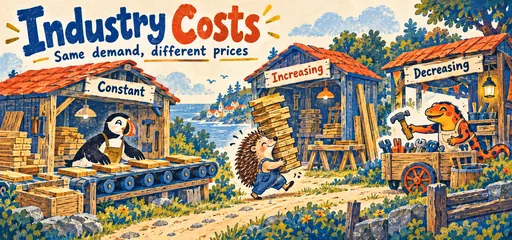

Risograph comic puffin, hedgehog and salamander compare constant, increasing and decreasing industry costs.

Industry Cost Conditions: Constant, Increasing and Decreasing

Paper collage anteater, otter and rooster bring Price, MC and Min ATC cards to one hilltop rest stop.

Long-Run Competitive Equilibrium: Price, MC and Minimum ATC

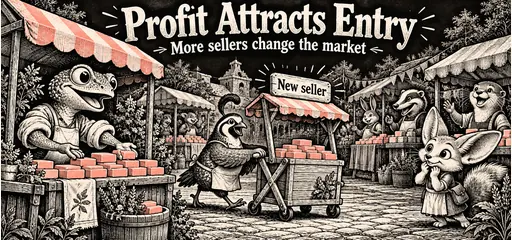
Scratchboard comic gecko and quail soap sellers welcome a new stall while a fennec watches.

How Economic Profit Attracts Entry in Competitive Markets

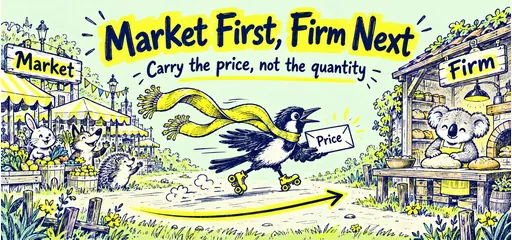
Ballpoint comic magpie carries a Price envelope from a busy market to a koala’s bread workshop.

Market Graph vs Firm Graph: Transfer Price, Then Find Output

Gouache comic chameleon pottery seller and pangolin compare operating with shutting down at a fork in the path.

Short-Run Supply Curve: Marginal Cost and the Shutdown Rule

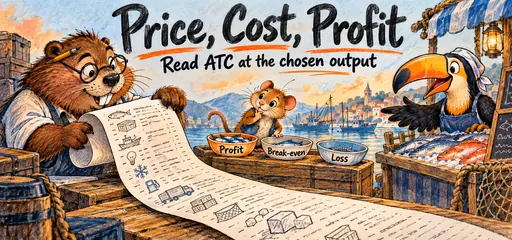
Charcoal comic beaver bookkeeper, dormouse and toucan inspect a receipt beside profit, break-even and loss bowls.

Price vs ATC: Calculate Economic Profit or Loss

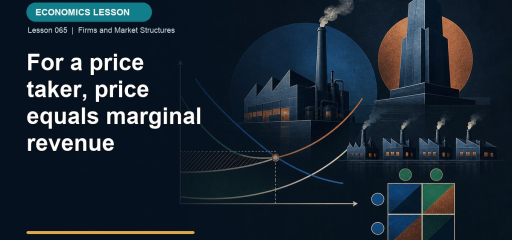
For a price taker, price equals marginal revenue

For a price taker, price equals marginal revenue

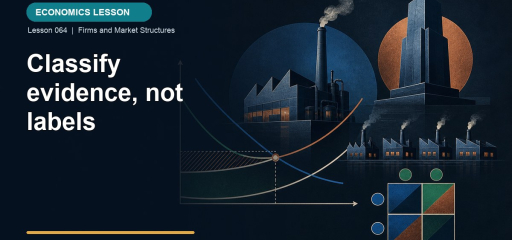
Classify evidence, not labels

Classify evidence, not labels

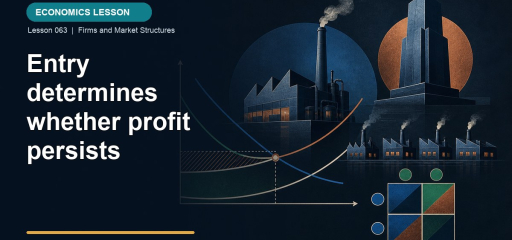
Entry determines whether profit persists

Entry determines whether profit persists

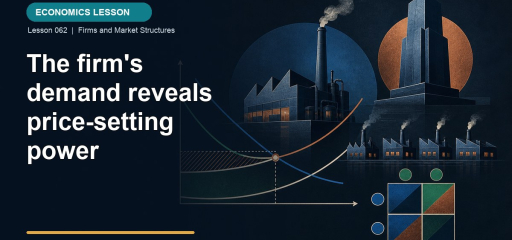
The firm’s demand reveals price-setting power

The firm’s demand reveals price-setting power