Blog

You can find helpful articles about mathematics and test prep in the Effortless Math blog.

Interested in Becoming an Effortless Math Guest Blogger? Click here

Search in Blog articles.

Chalk-pastel and sepia comic contrasting restrictive Black Code labor contracts with federal civil protections for contracts, property, and court access under the Civil Rights Act of 1866.

Black Codes and the Civil Rights Act of 1866

Review Black Codes and the Civil Rights Act of 1866 for CLEP. Compare labor rules, civil rights, Johnson’s veto and the override with four questions.

Woodcut and tempera comic of a freed family studying a family record, a reunited couple, community schoolbuilding, and a worker negotiating a contract with a Freedmen’s Bureau agent.

The Freedmen’s Bureau and the Meanings of Freedom

Review the Freedmen’s Bureau for CLEP: schools, families, land and labor. Compare assistance, Black agency and federal limits with four questions.

Crosshatched watercolor comic separating Lincoln’s wartime proposal from Johnson’s postwar clash with Congress, with freed families, a Black Union veteran, petitions, and southern rebuilding.

The Postwar Problem: Lincoln, Johnson, and Competing Reconstructions

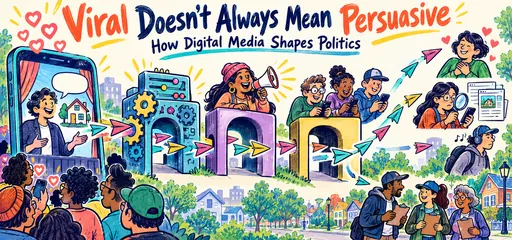
Felt-tip marker comic tracing political posts through recommendation systems, influencers, and users to different responses: support, source checking, distraction, and volunteer mobilization.

How Digital and Social Media Shape Politics

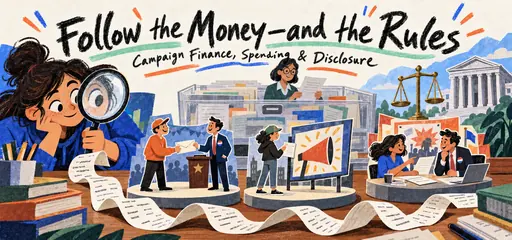
Cut-paper and crayon comic following receipts through direct campaign contributions, independent advertising, party planning, and disclosure reports, with a student examining the different relationships.

Campaign Finance Laws and Regulation

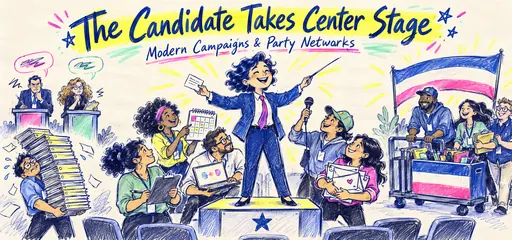
Ballpoint and highlighter comic of a fictional candidate conducting campaign staff, with primary rivals, fundraising, communications, calendars, and a separate party-support team bringing resources.

Modern Political Campaigns: Candidates, Parties and Strategy

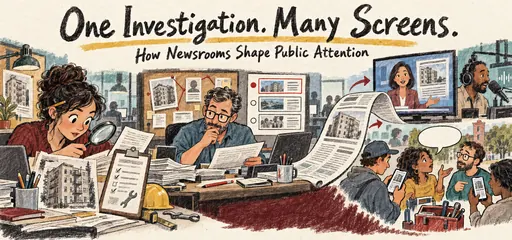
Charcoal and watercolor comic of a reporter investigating housing records, an editor checking the story, and reporting circulating through television, radio, phones, and public discussion.

How Traditional News Media Shape Politics

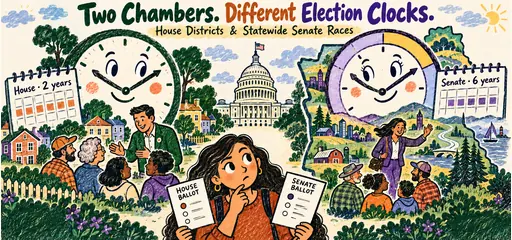
Rubber-stamp and oil-pastel comic showing a voter comparing House district and statewide Senate ballots, with separate two-year and six-year election clocks and candidates meeting their communities.

How Congressional Elections Work: House, Senate and Voting Rules

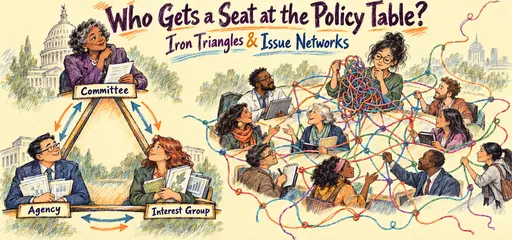
Dip-pen and colored-pencil comic comparing a stable triangle of committee, agency, and interest-group representatives with a broad web of researchers, journalists, advocates, and officials.

Iron Triangles and Issue Networks

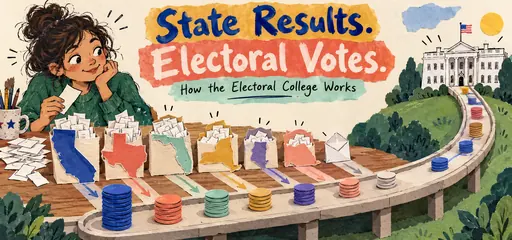
Cut-paper and gouache comic showing a curious voter sorting ballots into state-shaped packets, which become stacks of electoral tokens traveling toward the White House.

How the Electoral College Elects a President

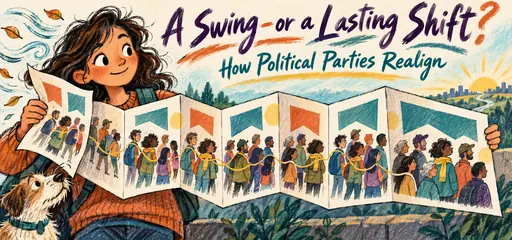
Brush-marker and chalk-pastel comic of a civic observer holding an accordion sketchbook that tracks changing voter coalitions across several elections, with a ribbon following people through the folds.

How Political Parties Change and Realign

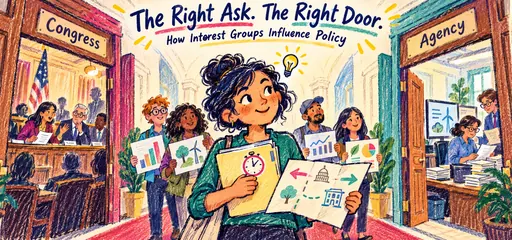
Wax-crayon and watercolor comic of a community advocate choosing between a congressional hearing and an agency office, carrying a timed proposal and evidence from fellow citizens.

How Interest Groups Influence Public Policy